


In an ever-changing industry, BrettYoung remains a constant. We remain family-owned, we offer you choice, and we have strong connections to local markets where we continue to grow our presence.
We’re proud of our investment in innovation and infrastructure and of our partnerships with world-class organizations. We’re passionate about bringing you choice through distinct and leading products to keep your operation profitable. By design, our success is deeply rooted within your success.
We are Distinct By Design and we wouldn’t have it any other way.
Agricultural Seed and Crop Inputs Categories
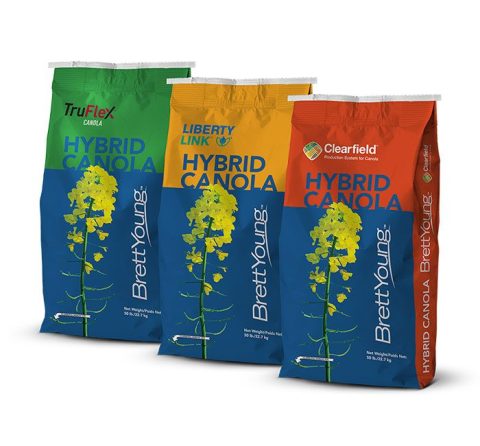
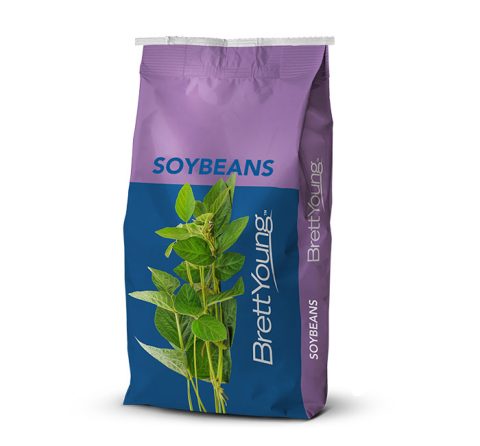
BrettYoung™ and DefendR are trademarks of Brett-Young Seeds Limited. Osmium , Signum, and Launcher are registered trademarks of Rizobacter S.A. Clearfield, and The UNIQUE CLEARFIELD SYMBOL and Clearfield are trademarks of BASF. LIBERTYLINK, LIBERTY, the LibertyLink logo and the Water Droplet Design are trademarks of BASF, used under license by BASF Canada Inc.
Enlist E3™ soybeans contain the Enlist E3 trait that provides crop safety for use of labeled over-the-top applications of glyphosate, glufosinate and 2,4-D herbicides featuring Colex-D™ technology when applied according to label directions. The transgenic soybean event in the Enlist E3™ soybean is protected under Corteva Agriscience and M.S. Technologies, L.L.C. Patent Rights. The purchase of these seeds conveys no license under said patents to use these seeds. A license must first be obtained from Corteva Agriscience by signing a Technology Use Agreement and abiding by the terms and conditions of the Product Use Guides for all technologies in this seed, including the Herbicide Resistance Management (HRM), and Use Requirements. For more information, contact your authorized retailer or Corteva Agriscience at 1-800-667-3852 or visit www.traitstewardship.corteva.ca. Corteva Agriscience is a member of Excellence Through Stewardship (ETS). No crop or material produced from this product can be exported to, used, processed or sold across boundaries into nations where import is not permitted. For further information about your crop or grain marketing options, contact Corteva Agriscience at 1-800-667-3852. ™ ® Trademarks of Corteva Agriscience and its affiliated companies. The transgenic soybean event in Enlist E3™ soybeans is jointly developed and owned by Corteva Agriscience and M.S. Technologies L.L.C. Enlist Duo™ and Enlist™ 1 are the only 2,4-D products authorized for use with Enlist™ crops. Consult Enlist herbicide labels for weed species controlled. Always read and follow label directions.
Bayer is a member of Excellence Through Stewardship (ETS). Bayer products are commercialized in accordance with ETS Product Launch Stewardship Guidance, and in compliance with Bayer’s Policy for Commercialization of Biotechnology-Derived Plant Products in Commodity Crops. These products have been approved for import into key export markets with functioning regulatory systems. Any crop or material produced from these products can only be exported to, or used, processed or sold in countries where all necessary regulatory approvals have been granted. It is a violation of national and international law to move material containing biotech traits across boundaries into nations where import is not permitted. Growers should talk to their grain handler or product purchaser to confirm their buying position for these products. Excellence Through Stewardship is a registered trademark of Excellence Through Stewardship.
ALWAYS READ AND FOLLOW PESTICIDE LABEL DIRECTIONS. It is a violation of federal law to use any pesticide product other than in accordance with its labeling. NOT ALL formulations of dicamba or glyphosate are approved for in-crop use with products with Roundup Ready 2 Xtend soybeans. ONLY USE FORMULATIONS THAT ARE SPECIFICALLY LABELED AND APPROVED FOR SUCH USES. Contact the Pest Management Regulatory Agency with any questions about the approval status of dicamba herbicide products for in-crop use with Roundup Ready 2 Xtend soybeans or products with XtendFlex Technology.
Roundup Ready 2 Technology contains genes that confer tolerance to glyphosate. Roundup Ready 2 Xtend soybeans contains genes that confer tolerance to glyphosate and dicamba. Glyphosate will kill crops that are not tolerant to glyphosate. Dicamba will kill crops that are not tolerant to dicamba. Contact your Bayer retailer, refer to the Bayer Technology Use Guide, or call the technical support line at 1-888-283-6847 for recommended Roundup Ready Xtend Crop System weed control programs.
BUTEO®, RIB Complete®, Roundup Ready 2 Technology and Design®, Roundup Ready 2 Xtend®, Roundup Ready 2 Yield®, Roundup Ready®, Roundup®, TruFlex®, VT Double PRO® and XtendFlex® are registered trademarks of Bayer Group. Used under license. Bayer CropScience Inc. is a member of CropLife Canada.
ALWAYS READ AND FOLLOW PESTICIDE LABEL DIRECTIONS. Fortenza Advanced is an on-seed application of Rascendo Seed Treatment insecticide and Fortenza Seed Treatment insecticide. Fortenza , Helix , Rascendo, Saltro and the Syngenta logo are registered trademarks of a Syngenta Group Company.
All other trademarks are property of their respective companies.
News Releases
-

BrettYoung Awarded Best Managed Companies Platinum Club Status
BrettYoung News, Agricultural Seed & Crop Inputs, Professional Turf & Reclamation, Seed Production, Wholesale Forage & Turf SeedWinnipeg, MB – May 14, 2024 – BrettYoung™ is a 2024 winner of the Canada’s Best Managed Companies Platinum Club designation, having retained its Best Managed designation for seven consecutive years or more. BrettYoung is recognized with Platinum Club status for its unique position as Canada’s Largest Independent Seed Company, having demonstrated sustained, industry-leading performance.…
-

BrettYoung’s New State-of-the-Art Turf Seed Processing Facility Opens Doors
BrettYoung News, Agricultural Seed & Crop Inputs, Professional Turf & Reclamation, Seed Production, Wholesale Forage & Turf SeedWINNIPEG, MB – BrettYoung is growing — and so are its operational capacities. To keep up with the demand from its customers who serve global turf seed markets, BrettYoung has made a $20 million investment in NorthCore, a facility equipped with the latest technologies for cleaning, sorting, and packaging turf seed. The 60,000 sq. ft.…
-

Leadership Evolution at BrettYoung
Agricultural Seed & Crop Inputs, BrettYoung News, Professional Turf & Reclamation, Seed Production, Wholesale Forage & Turf SeedFOR IMMEDIATE RELEASE July 4, 2023 WINNIPEG, MB – As an important element of its leadership continuity plan, BrettYoung’s Board of Directors is pleased to announce a number of upcoming changes to its senior leadership. Effective September 1st, 2023, Trevor Thiessen’s Board term will expire, and he’ll depart from the Board of Directors; Lloyd Dyck will…

Follow BrettYoung